Types of Jellyfish
Types of jellyfish: drifters, stingers and reef-builders
The types of jellyfish in this hub stretch the word to its proper family borders: the cnidarians — true jellyfish, box jellyfish, siphonophores, and their stay-at-home cousins the corals and sea anemones. All of them are built from the same kit of stinging cells, tentacles and jelly, and none of them is a fish. This hub organises all 28 cnidarian profiles in the programme into their three natural camps.
By Emily Carter · Reviewed by our vet team · Updated 10 November 2026 · 7 min read
No brain, no heart, no bonesStinging cells: nematocystsSome may be biologically immortal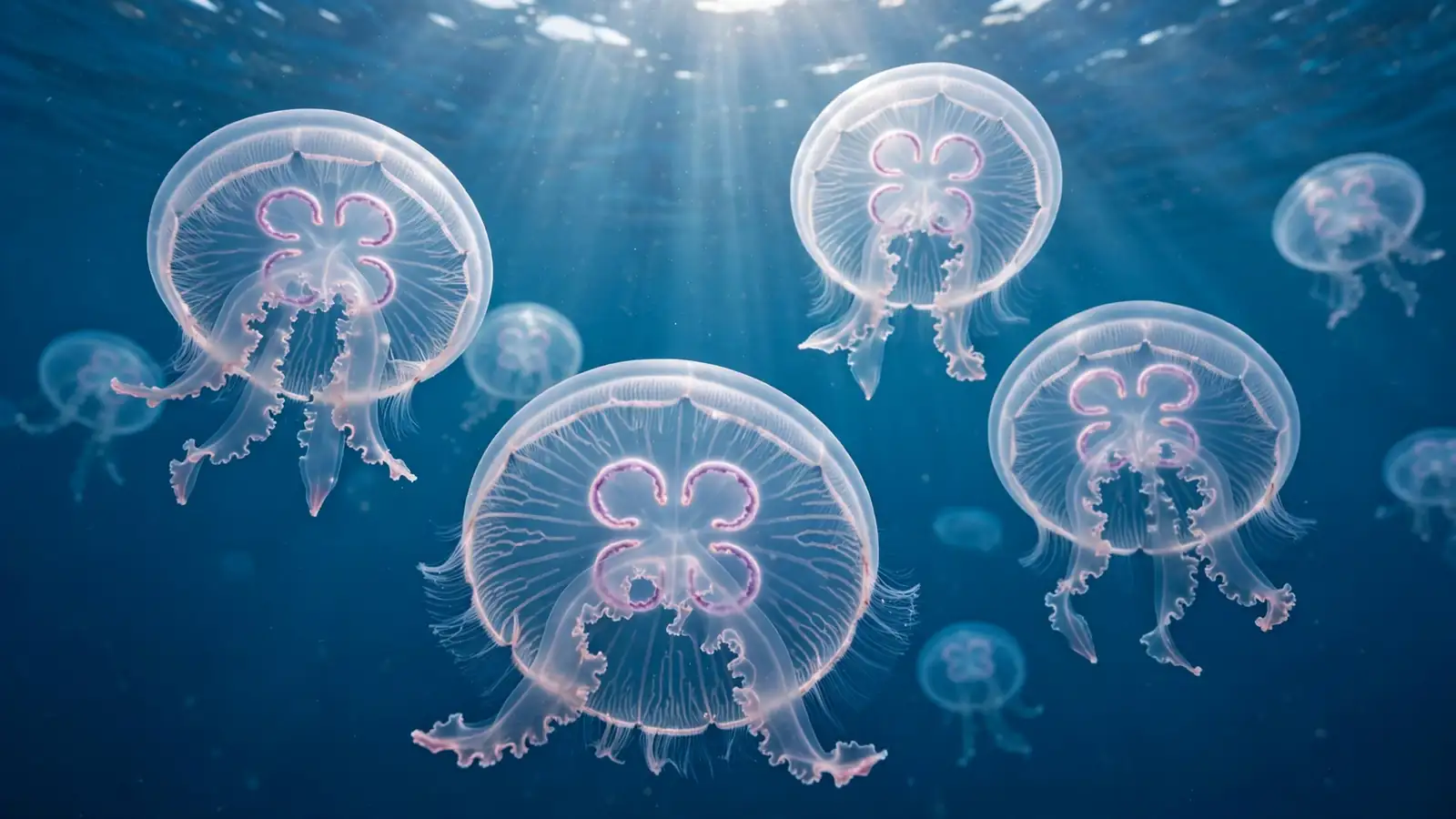
At a Glance
Strictly, the types of jellyfish begin with the free-swimming medusae — but their family, the cnidarians, also builds the reefs and waves the anemone’s tentacles, so this hub keeps the whole clan together. The three camps below follow the family tree: the true jellyfish, the box jellyfish and colonial drifters, and the corals and anemones that traded swimming for building.
Every profile is one click away. If you remember a single fact, make it this: there is no fish involved. These are brainless, heartless, boneless animals that have run the oceans for over 600 million years. The types of jellyfish below are the famous faces of that ancient clan.
Types of Jellyfish: The True Jellyfish
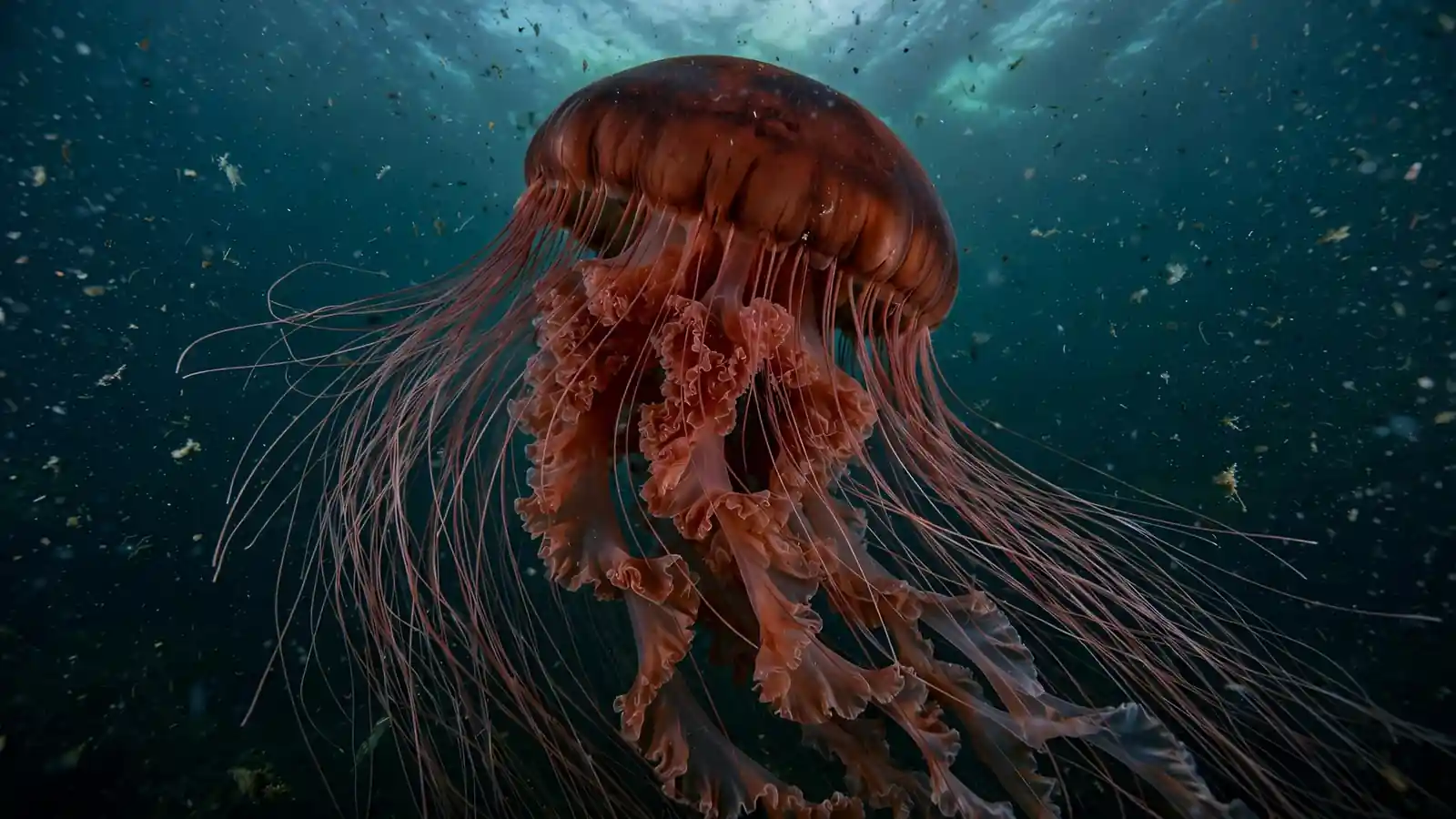
The scyphozoans — the classic bell-and-tentacles jellyfish, pulsing through the plankton. The jellyfish reference page maps their life cycle, which alternates between a drifting medusa and a tiny anchored polyp on the seabed. Of all the types of jellyfish, these are the ones most people picture first.
Every jellyfish in this section leads a double life. The swimming medusa is only the adult chapter: beneath it, the same animal spends part of its life as a tiny polyp fixed to the seabed, budding off baby jellyfish like a plant shedding seeds. When conditions align, those medusae gather in blooms of thousands — the swarms that close beaches, clog fishing nets and, for the animals that eat them, ring the dinner bell across whole coastlines. It is the double life that all the true types of jellyfish share.
Box Jellyfish and the Colonial Drifters
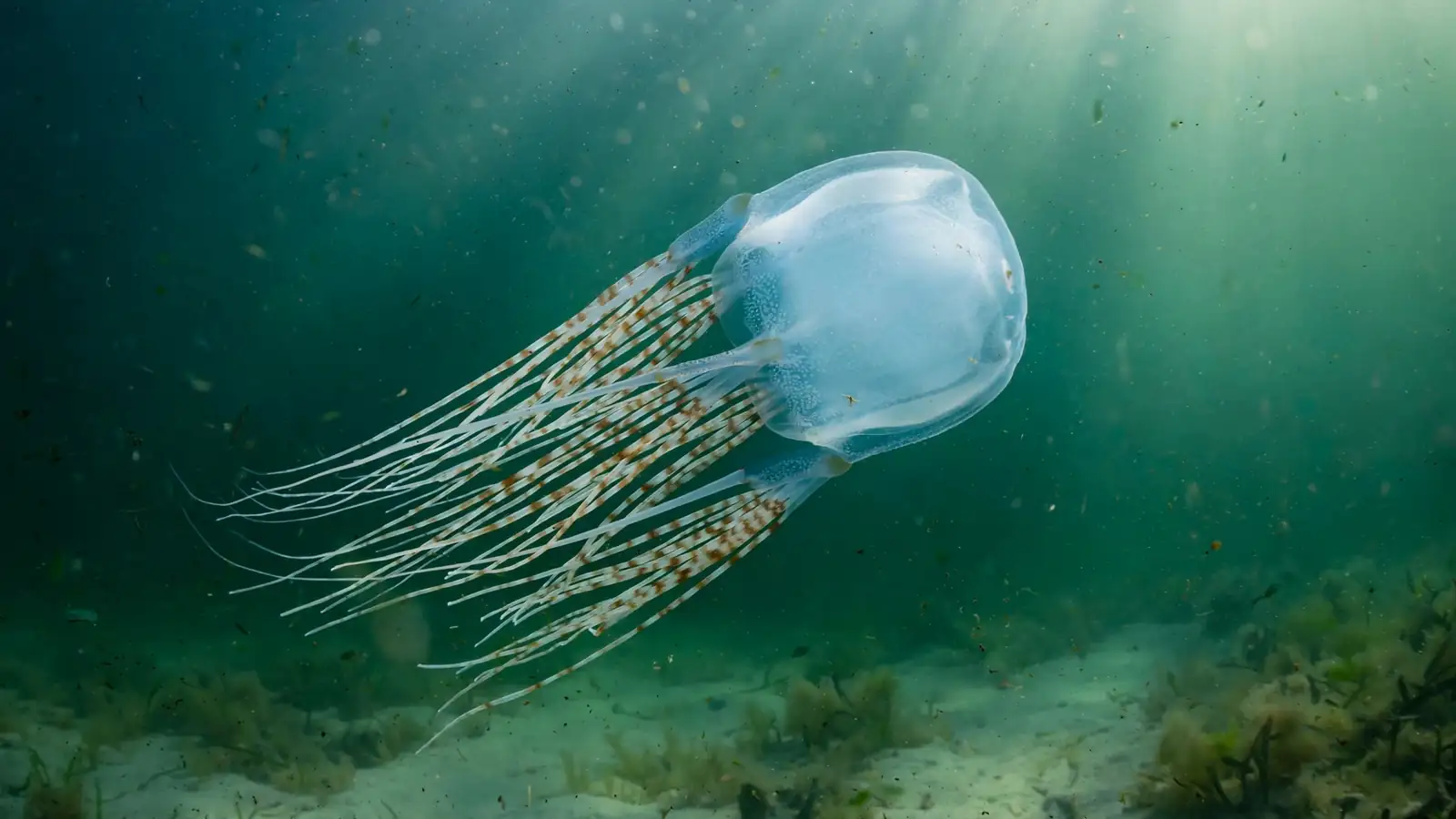
The advanced swimmers and the colonies — jellyfish relatives with eyes, with sails, and in one case with the most feared venom in the sea:
Corals and Anemones: The Ones That Stay Put
The same stinging toolkit, anchored for life — and between them, these animals build the largest structures made by living things:
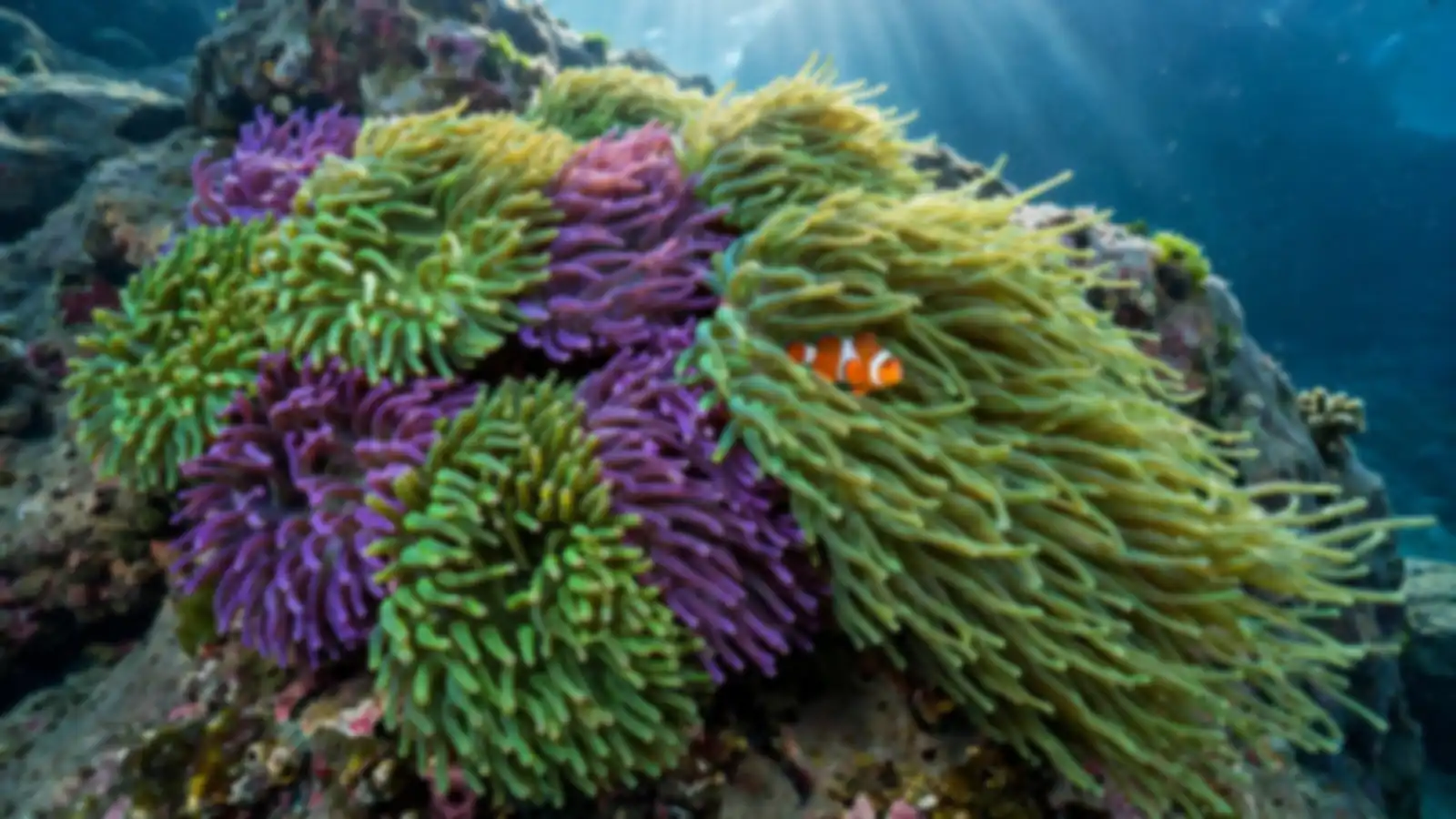
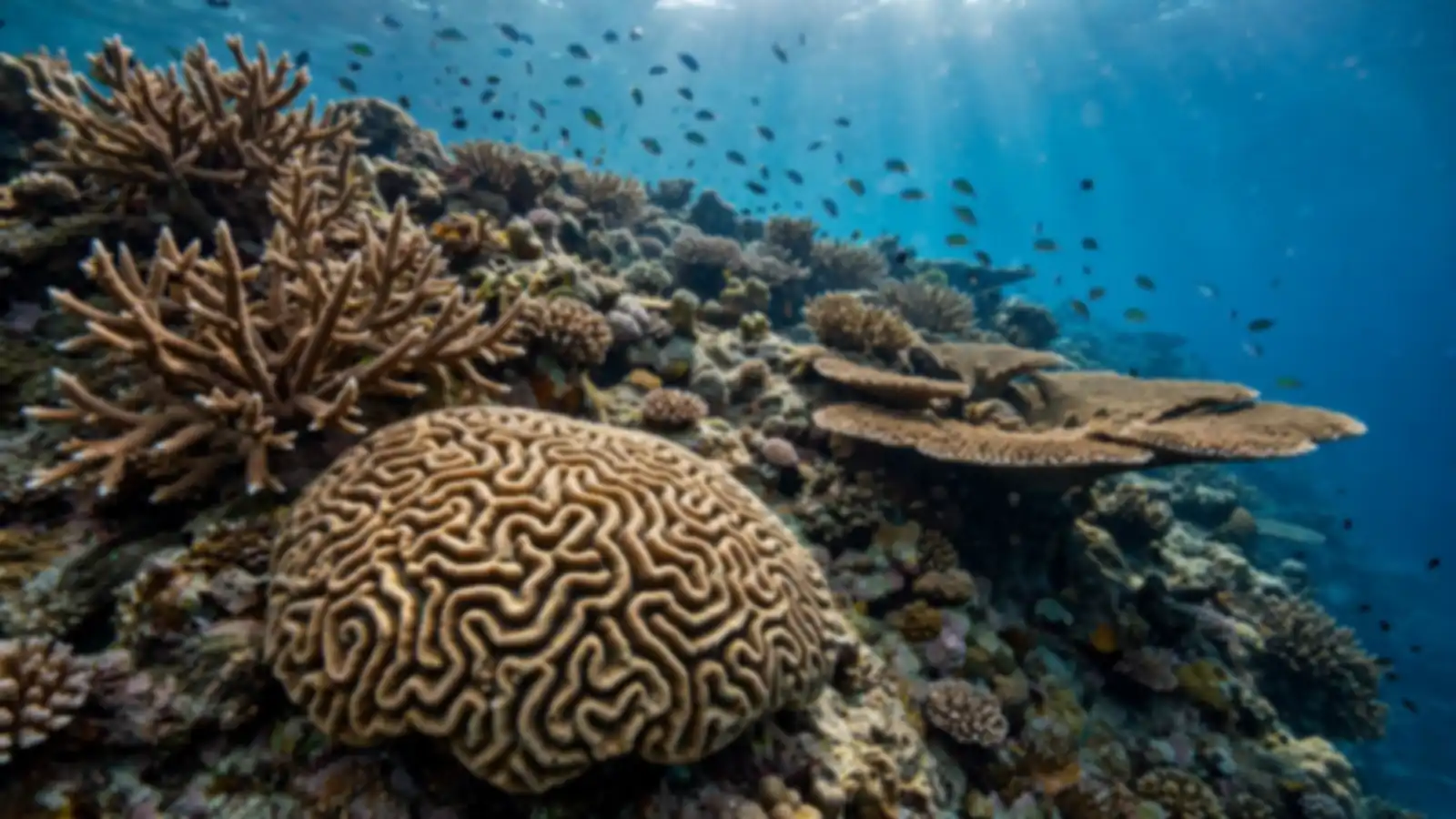
Do not let their stillness undersell them. The stony corals in this section build the reef cities that shelter roughly a quarter of all marine species, while anemones run the ocean’s most famous partnership, trading protection for housekeeping with clownfish. The drifting jellyfish get the headlines; their anchored cousins built the neighbourhoods. Between the drifters and the builders, the types of jellyfish cover both halves of the cnidarian story.
Fun Facts
- A jellyfish is over 95 per cent water, with no brain, heart, blood or bones — yet the group has survived five mass extinctions.
- The immortal jellyfish can revert from adult to polyp and begin again, the only known animal that can cheat death this way.
- The green fluorescent protein from the crystal jellyfish won a Nobel Prize and now lights up research in every biology lab.
- A box jellyfish has 24 eyes, including camera-like eyes with lenses — but no brain to process what they see.
- Black corals can live over 4,000 years, making them among the oldest continuously living animals on Earth.
- The Portuguese man o’ war is a colony of specialised individuals; not one of them can survive alone.
Frequently Asked Questions
How Many Species of Jellyfish Are There?
About 200 species count as true jellyfish (the scyphozoans), with around 50 box jellyfish and some 2,000 hydrozoans — the wider medusa-producing family — beyond them. Adding the whole cnidarian clan of corals and anemones takes the phylum past 11,000 species. This hub profiles 28 of the most searched-for, from moon jellies to the Portuguese man o’ war.
What Are the Main Types of Jellyfish?
The main types are the true jellyfish (Scyphozoa) such as moon jellies and lion’s manes; the box jellyfish (Cubozoa), fast swimmers with real eyes; the hydrozoans, including the immortal jellyfish and siphonophores like the Portuguese man o’ war; and the stalked jellyfishes, which stay attached to seaweed. Corals and anemones are their non-swimming cousins in the same phylum.
Are Jellyfish Actually Fish?
No. Jellyfish are invertebrates of the phylum Cnidaria, with no bones, brain, heart or blood — fish are vertebrates with all of those. The name is a historical accident, which is why many scientists now call them simply jellies. Their closest relatives are corals and sea anemones, not anything with fins.
What Is the Most Dangerous Jellyfish in the World?
The Australian box jellyfish — the sea wasp, Chironex fleckeri — is considered the most dangerous jellyfish in the world. Its venom can cause cardiac arrest within minutes, and its nearly invisible tentacles stretch up to three metres. The tiny Irukandji jellyfish is also feared for the delayed, severe syndrome its sting can trigger.
Do Jellyfish Have Brains or Hearts?
No — jellyfish have neither. A loose nerve net coordinates the pulsing bell, and simple sensory organs detect light, gravity and chemicals. Box jellyfish go furthest, with 24 eyes including lensed, camera-type eyes, yet still no central brain. Digestion, stinging and swimming all run without any central processor at all.
How Long Do Jellyfish Live?
Most jellyfish live months to a year or so as swimming medusae, though their polyp stage can persist far longer. One species breaks every rule: the immortal jellyfish can transform its adult cells back into a polyp and restart its life cycle, making it potentially biologically immortal — the only animal known to do this.
What Eats Jellyfish?
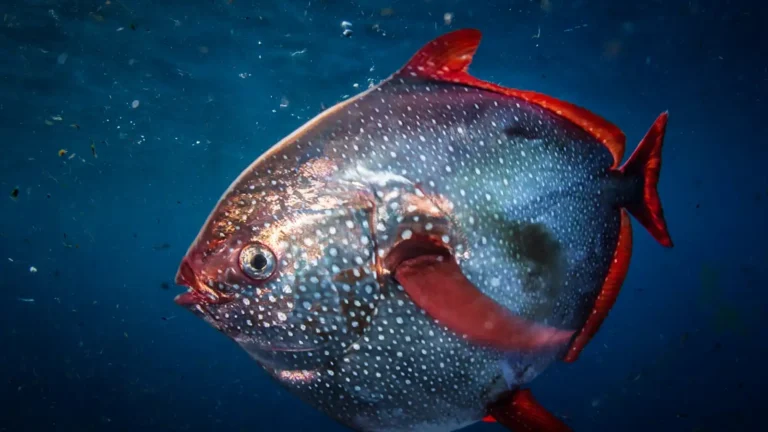
Sea turtles — especially leatherbacks — are the great jellyfish specialists, alongside ocean sunfish, some seabirds, tuna and even other jellyfish. Jellyfish are mostly water, but their quick growth makes them a fast-food crop of the ocean. In some countries people eat them too, prizing the crunchy texture of specially prepared species.
Similar Species Worth Exploring
Keep Exploring
Drift on to the box jellyfish for the family’s sharp end, or anchor yourself with the types of echinoderms. For the hunters that live on jellyfish, meet the sea turtles and marine reptiles that specialise in eating them. For the ultimate sting comparison, read box jellyfish vs Portuguese man o’ war. Six hundred million years of success swims behind the types of jellyfish.